Supplied three-gear specification reference
.webp&w=3840&q=75)
What buyers should know
To verify a car vacuum cleaner suction claim, match the figure to the exact model and operating gear, record the battery charge and attachment, and repeat the test using one documented method. Compare pickup performance, runtime, heat, noise, filter condition and sealing alongside the stated pressure. Do not transfer a figure from one pictured set to another without model confirmation.
1. Start with a model-matched specification
Ask the supplier to identify the exact model code, motor platform, rated voltage, rated power, battery notation and available operating gears. A photograph can identify a configuration reference, but it cannot prove that every pictured color or accessory set uses the same internal platform.
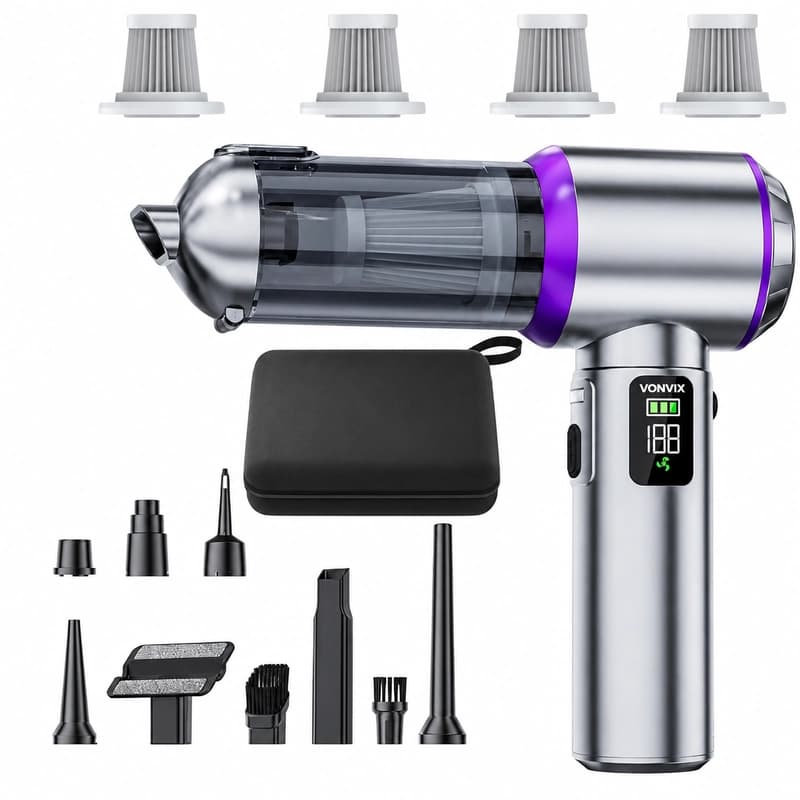
The supplied VONVIX sheet for the silver and purple three-gear design states 16,000 Pa suction, 120 W rated power, DC 11.1 V, a 3 × 2000 mAh battery notation, ABS housing and a listed size of 21 × 20 × 6.5 cm. These are supplier-stated reference values and should be matched to the selected model and approved sample.
- Exact model or quotation reference
- Operating gear used for the claim
- Rated voltage and power
- Battery pack notation and charging method
2. Ask how the suction figure was measured
A pressure figure can change with the measurement position, attachment, filter condition, dust-cup sealing and battery state. Request the measuring instrument, test connection, operating gear and test duration. Record whether the value is a peak reading or a stable reading.
If a laboratory report is not available, ask for a repeatable factory test record or video that shows the model, instrument and setup. Treat an application illustration as proposed use, not performance evidence.
3. Add a repeatable pickup test
Pressure measurement does not fully describe cleaning performance. Compare approved samples using the same debris mass, surface, nozzle, cleaning path and operating time. Suitable test materials can include crumbs, sand-like particles or other debris relevant to the target customer, provided every sample uses the same controlled setup.
Record the starting debris mass and remaining debris, or use a consistent visual grading method. The goal is not to create an impressive demonstration but to produce a comparison that can be repeated during approval and inspection.
4. Control battery state, filters and attachments
Charge samples using the approved charger and begin tests at a defined battery state. A partially charged battery can make an otherwise identical unit appear weaker. Clean or replace filters consistently, inspect dust-cup seals and use the same attachment for every comparison.
For multi-gear products, record results by gear. A narrow crevice tool may create a different pressure reading and pickup behavior from a wide cleaning head, so the attachment must be stated with the result.
5. Check runtime, heat and noise with suction
A higher headline figure is not automatically the better retail product if runtime, heat, noise or handling becomes unacceptable. Run the selected gear for a defined interval and record operating time, housing temperature observations, unusual noise and loss of performance as the battery discharges.
Confirm which performance claims can be supported consistently in manuals, product listings and retail packaging. Avoid publishing maximum figures without the relevant conditions.
- Runtime on the claimed gear
- Heat after a defined interval
- Noise and vibration observations
- Filter and dust-cup sealing
- Performance near battery depletion
6. Approve one complete retail sample
The approved sample should include the product, battery, charging cable or charger, every attachment, filters, manual, labels and final packaging. Keep the model reference, specification revision, artwork and packing list together.
Before bulk shipment, check function, gear selection, charging, filter fit, dust-cup sealing and accessory completeness against this approved reference. If suction is part of the acceptance plan, use the same documented method and tolerance agreed during sampling.
7. Send an inquiry suppliers can answer
Provide the target market, quantity, selected photo reference, expected functions, preferred accessories and packaging requirements. Ask the supplier to confirm which stated figures belong to the chosen model and which measurements still require sample verification.
For VONVIX sets, request stock status, MOQ, sample dispatch time and customization feasibility separately. In-stock ready-to-ship items may be dispatched within two days after stock and order requirements are confirmed; customized schedules depend on the requested changes, artwork, materials and tooling.
Procurement FAQ
Does a higher Pa figure always mean better cleaning?
No. The pressure figure must be considered with airflow, attachment, sealing, filter condition, battery state and pickup performance under consistent test conditions.
Can the 16,000 Pa reference be applied to every pictured VONVIX set?
No. The supplied sheet pictures the silver and purple three-gear design. Match the specification to the exact model and approved sample before using it for another color or kit.
What should be recorded in a suction test?
Record the model, gear, battery state, filter condition, attachment, measuring instrument, connection point, duration and whether the result is a peak or stable reading.
What affects MOQ and sample timing?
Stock availability, battery configuration, logo, color, appearance, packaging, artwork approval, materials and new tooling can all affect MOQ and preparation time.
This guide is reviewed by Niki from the VONVIX sourcing team and reflects the product selection, sample approval and quality-control questions commonly discussed with international buyers.
About VONVIX